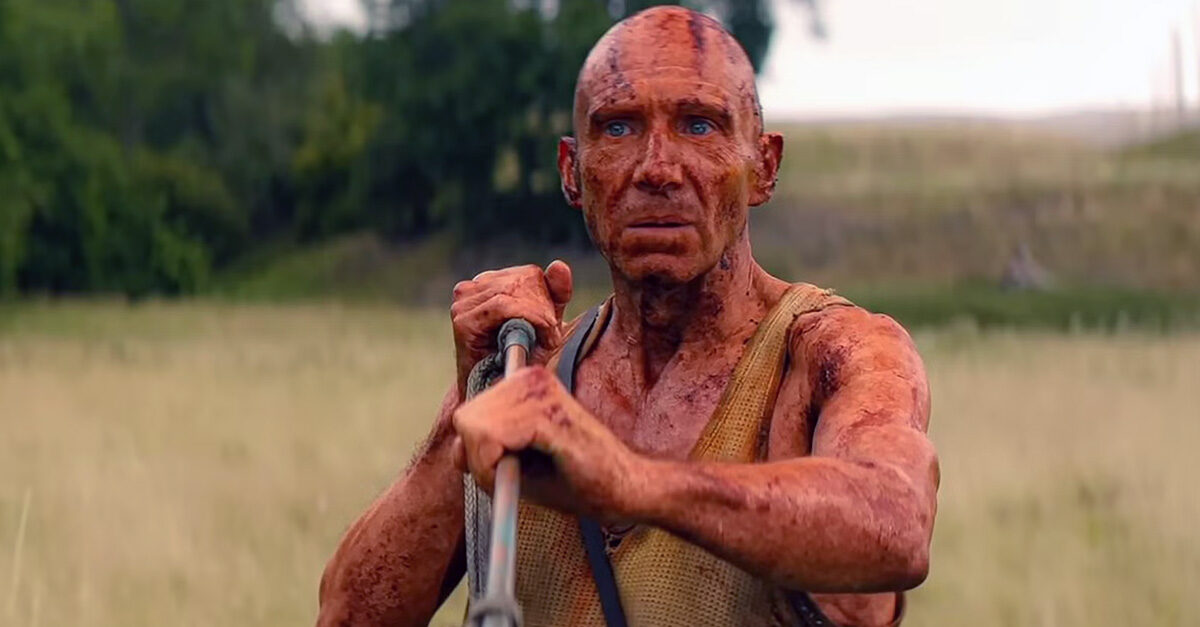
About the film (courtesy of Columbia Pictures):
Dr. Kelson (Ralph Fiennes) makes a discovery that could change the world as they know it – and Spike’s (Alfie Williams) encounter with Jimmy Crystal (Jack O’Connell) becomes a nightmare he can’t escape. In the world of The Bone Temple, the infected are no longer the only threat to survival – the inhumanity of the survivors can be stranger and more terrifying.
Twenty-four years ago, the landscape of survival horror was permanently altered by the frantic, digital grain of 28 Days Later (2002). Since then, the franchise has seen the world crumble and slowly attempt to rebuild, with 28 Weeks Later (2007) and the more recent 28 Years Later (2025) exploring the exhaustion of a society living on the brink.
While the sheer kinetic terror of the “Rage” virus has naturally simmered as the human population thins, this shift provides a fertile ground for deeper narrative exploration. 28 Years Later: The Bone Temple seizes this opportunity, trading some of the series’ signature adrenaline for a more polished, character-driven expansion of this bleak universe.
Acting as a compelling side-story that could easily anchor its own branch of the mythology, 28 Years Later: The Bone Temple explores how the remaining survivors have adapted—or devolved—within the ruins. The plot picks up in the wake of previous events, further exploring “the Jimmies,” a faction defined by their penchant for brutal subjectification.
Leading this chilling new order is Sir Jimmy Crystal, played with a menacing edge by Jack O’Connell. The presence of such a grounded, human threat reminds the audience that even when the infected aren’t screaming at the gates, the darkness within the survivors is just as deadly.
The return of familiar faces provides the emotional weight necessary to keep the stakes high. Spike, portrayed by Alfie Williams, finds himself thrust into a situation even more harrowing than his previous encounters, serving as the audience’s primary lens into this new era of cruelty.
Meanwhile, Ralph Fiennes returns as Dr. Ian Kelson. Fiennes brings a weary, clinical gravitas to the role, proving that in a world without hospitals, the burden of being a doctor is a lifelong sentence, albeit an unconventional one, for sure. It is impressive how 28 Years Later: The Bone Temple manages to deepen these character arcs while simultaneously pushing the broader lore forward.
Stepping into the director’s chair is Nia DaCosta, known for her work on Candyman (2021) and The Marvels (2023). Working from a script by franchise veteran Alex Garland, DaCosta brings a fresh visual perspective to the wasteland. While the narrative structure of 28 Years Later: The Bone Temple may feel a bit scattered during the first two acts, the patience of the viewer is rewarded. By the final frame, the disparate threads weave together into a cohesive and satisfying conclusion that hints at a much larger “Universe” in the making.
Ultimately, this installment is a more refined experience than its immediate predecessor. It strategically plants the seeds for future conflicts, suggesting that the franchise is far from finished. What 28 Years Later: The Bone Temple lacks in traditional jump-scares, it more than compensates for with a compelling plot and strong ensemble performances.
For those who value storytelling as much as spectacle, this is a journey worth taking. Fans can sink their teeth into 28 Years Later: The Bone Temple when it arrives in theaters on Friday, January 16th.