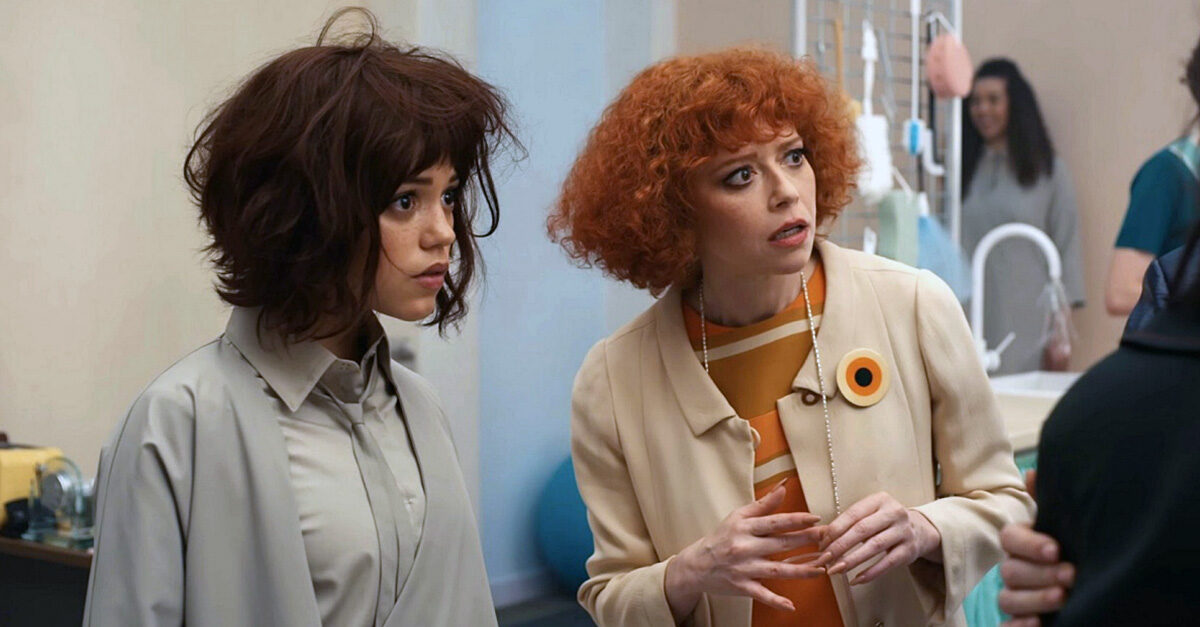
About the film (courtesy of Sony Pictures Releasing):
Based on the bestselling novel from Nobel Prize-winner Kazuo Ishiguro and written and directed by Academy-Award® winner Taika Waititi, the story introduces audiences to Klara, an Artificial Friend who wants nothing more than to find the perfect home. When Klara meets Josie, each immediately senses a kindred spirit in the other. Josie has a fraught relationship with her mother and they’ve suffered great loss, but Klara’s innocent wonder and unwavering loyalty begin to heal the family and bring light to Josie’s complicated world.
Several years ago, a film with a seemingly preposterous premise was unleashed upon audiences by an unconventional filmmaker, defying expectations and morphing into a critical and commercial triumph that few saw coming. That feature was, of course, the Oscar-winning Jojo Rabbit (2019). It served as a definitive moment where triple-threat director, writer, and actor Taika Waititi showcased the sheer breadth of his cinematic vision, seamlessly balancing absurdist comedy with deeply poignant drama.
Much in that same vein of eccentricity and heart comes another far-from-traditional narrative helmed by Waititi in Klara and the Sun. Adapted from Kazuo Ishiguro’s acclaimed novel, the story unfolds across a dystopian future where the internet has vanished and genuine human connection proves more elusive than ever. In this world, parents purchase sophisticated androids to safeguard their isolated children from loneliness and emotional drift.
Jenna Ortega turns in an exceptional performance as Klara, an observant and slightly quirky “Artificial Friend.” Ortega relies on subtle, intricate facial micro-expressions and precise physical mannerisms that convey both robotic calculation and emerging soulfulness. Her portrayal anchors the narrative, turning what could have felt like an emotionless synthetic construct into a remarkably complex and sympathetic character.
Mia Tharia matches Ortega’s screen presence beat for beat as Josie, the sickly teenager who chooses Klara as a companion. The natural chemistry between the two leads gives the central relationship an authentic, tender heartbeat. Veteran performers Amy Adams and Natasha Lyonne inject immense stability and dramatic depth, capturing the quiet desperation and moral compromises of parenthood in an uncertain world. Meanwhile, Steve Buscemi arrives to round out an impressive ensemble in Klara and the Sun, providing subtle gravitas whenever the tone demands it.
From a visual standpoint, the production design of Klara and the Sun and cinematography offer plenty to appreciate. Sweeping, bright, sunny countryside views totally clash with the empty, depressing spaces inside the characters’ lives. The camera lingers thoughtfully on quiet interactions, allowing the visual framing to mirror Klara’s unique sensory perspective of the surrounding environment.
While Klara and the Sun contains plenty of trademark eccentricities and moments that provoke genuine laughter, Waititi ensures the underlying emotional stakes carry substantial weight. The screenplay does not shy away from existential dilemmas surrounding mortality, loneliness, and what it truly means to possess an irreplaceable soul.
The stylistic blend in Klara and the Sun will not appeal to every moviegoer, and that is perfectly fine. Waititi’s idiosyncratic pacing and tonal shifts can feel slightly disorienting to those expecting a run-of-the-mill science fiction melodrama. Yet the underlying themes land with resonance, especially for audiences willing to look past conventional genre formulas and simply absorb the impactful story being told. It honestly feels a bit longer than its almost-two hour runtime.
Klara and the Sun possesses an abundance of sincerity and striking elegance for anyone ready to embrace its gentle, yet emotional gaze. Be your own judge when it arrives in theaters on Friday, October 23rd.