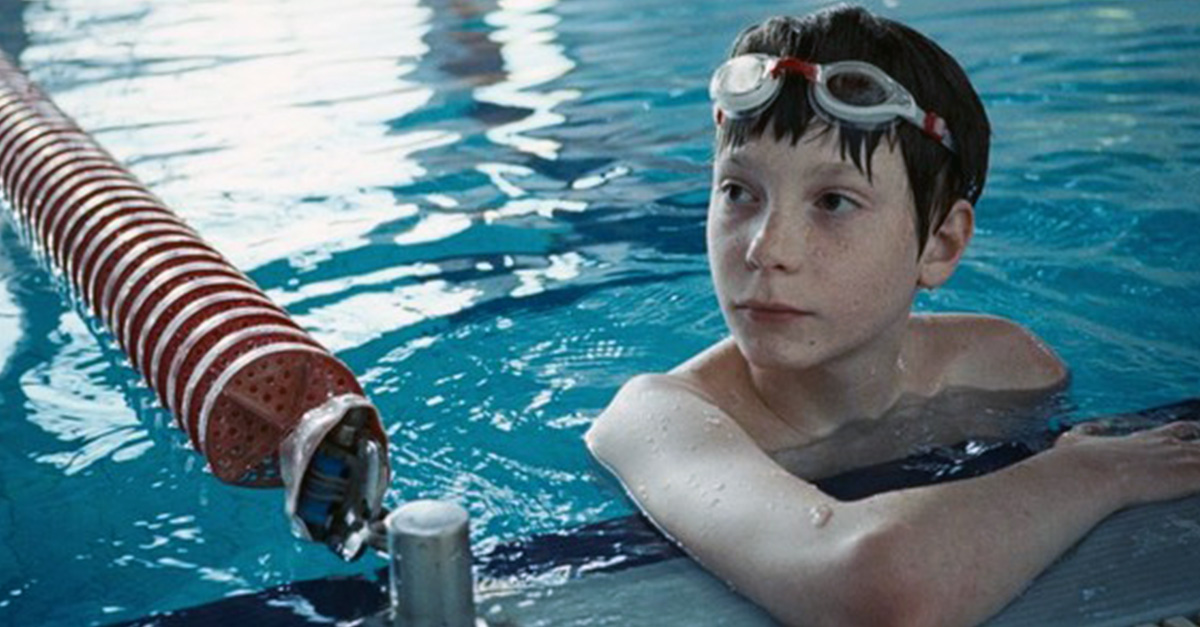
About the film (courtesy of IFC Films):
In the summer of 2003 at an all-boys water polo camp, a socially anxious twelve-year-old is pulled into a cruel tradition targeting an outcast with an illness they call “The Plague.” But as the lines between game and reality blur, he fears the joke might be hiding something real.
Adolescence is often romanticized in cinema as a time of bike rides and first crushes, but Charlie Polinger’s directorial debut paints a much more impactful, haunting picture. The Plague is an uncompromising look at the social hierarchy of preadolescence, transforming the typical growing pains of a twelve-year-old into a high-stakes psychological thriller. It is a film that demands your undivided attention while simultaneously making you want to look away, capturing the suffocating pressure to conform with a precision that feels both authentic and terrifying.
The Plague centers on Ben, played with heartbreaking vulnerability by Everett Blunck, as he navigates the treacherous waters of middle-school social circles. The script explores the cost of acceptance through Ben’s interactions with Jake, the group’s alpha who brands Ben with the cruel nickname “Soppy.” This yearning to belong is put to the ultimate test when Ben finds himself drawn to Eli, a social outcast with a penchant for macabre jokes. Under different circumstances, their bond might have been a lifeline, but in this world, associating with Eli is social suicide. This dynamic echoes the primal social structures found in Lord of the Flies (1963), highlighting how the “mob thinking” of young boys can quickly devolve into something predatory.
Polinger creates an atmosphere that is intentionally overstimulating, utilizing an elevated sound design that sharpens every whisper and taunt. The score by Johan Lenox feels stripped from a high-budget horror flick, which is fitting because, for Ben, this social landscape is a literal house of horrors. Even the moments that should offer a reprieve—like a quiet conversation in a sauna—are laced with an unshakable sense of dread. The Plague uses intimate close-ups and elements of body horror to mirror the internal turmoil of a boy losing his sense of self. It captures the feeling of being thirteen better than almost any movie in recent memory, even when the surreal imagery of a synchronized swimming dream sequence breaks the tension.
While the acting is top-tier across the board, Joel Edgerton provides a grounded presence that anchors the more heightened, feverish energy of the film’s second half. However, it is the graphic depiction of the characters’ psychological and physical tolls that makes The Plague a “tough sit.” The movie dives deep into the reality of self-harm and the violent turns that peer pressure can take. It’s the kind of storytelling that might make some viewers feel physically nauseous, yet it remains vital. It refuses to sugarcoat the cruelty that children are capable of, making the eventual outbursts of violence feel like an inevitable conclusion to the building pressure.
Ultimately, The Plague is a gripping, albeit grueling, cinematic experience. It isn’t a movie meant for a casual Friday night, but it is a necessary one for understanding the modern adolescent experience. Much like the raw intensity seen in Eighth Grade (2018) or the dark social commentary of Mean Creek (2004), this film lingers uncomfortably due to its bullying antics. It is a haunting reminder that the scars we earn at twelve years old often take a lifetime to heal.
After a limited release, The Plague expands to a wide release in theaters starting January 2.